Diesel Supply
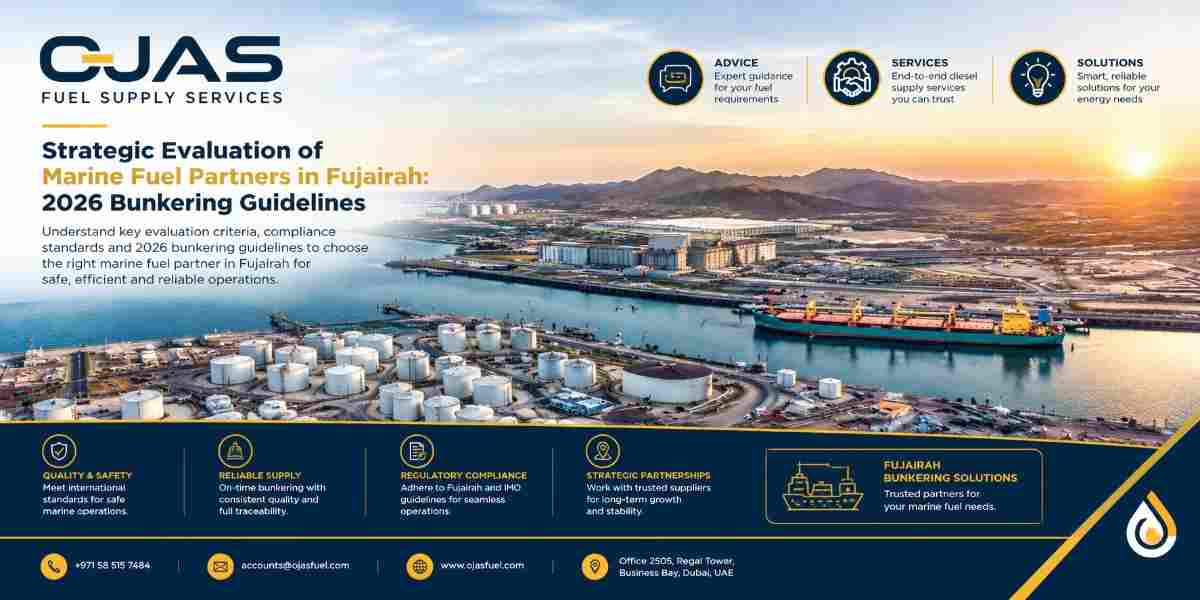
Strategic Evaluation of Marine Fuel Partners in Fujairah: 2026 Bunkering Guidelines
Key Highlights
- Mandatory verification of Federal Law No. 14 of 2017 permits mitigates legal liability during bunkering operations in the UAE.
- Electronic Bunker Delivery Notes under MARPOL Annex VI require nine specific data points for international regulatory compliance.
- Marine Diesel Oil (MDO) procurement demands a Certificate of Analysis confirming ESMA specifications before the offloading process begins.
A reliable bunker fuel partner in Fujairah must operate under a valid permit issued by the Competent Authority, strictly adhering to Federal Law No. 14 of 2017. Supply coordinators must arrange fuel deliveries that align with ESMA specifications and maintain rigorous documentation to prevent severe legal penalties.
Evaluating your marine fuel partner within the United Arab Emirates requires an uncompromising audit of their regulatory standing. The foundational legal framework governing this sector is Federal Law No. 14 of 2017 on Petroleum Products Trading.
This legislation stipulates that no legal entity may trade or distribute petroleum products without a direct permit issued by the Competent Authority. Engaging with an unlicensed entity or an intermediary lacking the proper documentation exposes your receiving vessel to catastrophic legal liabilities.
The UAE enforces strict penalties to combat illegal trading and ensure absolute adherence to environmental safety protocols. The physical product coordinated for delivery must strictly adhere to the quality baselines established by the Emirates Authority for Standardization and Metrology (ESMA).
As a vessel operator, you must systematically verify the permit status and port registration of a partner before authorizing any Marine Fuel Coordination.
| Regulatory Violation under Federal Law No. 14 of 2017 | Statutory Penalty |
| Trading petroleum products without a valid permit | Imprisonment (up to 1 year) and/or fine of AED 100,000 to AED 500,000 |
| Providing fuel non-compliant with ESMA standard specifications | Imprisonment (up to 1 year) and/or fine of AED 100,000 to AED 500,000 |
| Repeated offenses of unauthorized trading or non-compliant supply | Imprisonment (minimum 1 year) and fine of AED 1,000,000 to AED 5,000,000 |
| Acquiring petroleum from unlicensed persons | Fine not exceeding AED 500,000 |
How does the 2026 maritime disruption impact marine fuel availability?
Severe geopolitical turbulence in the Arabian Gulf fundamentally altered the strategic maritime environment in 2026, leading to a profound contraction in regional traffic.
Your procurement teams must prioritize supply coordinators with proven anchorage-side capabilities and transparent logistics to avoid costly vessel delays in congested maritime corridors.
If your operations rely on the Arabian Gulf, you already know how the escalation of hostilities and subsequent disruptions in the Strait of Hormuz drastically impacted commercial shipping lanes.
Consequently, bunker fuel sales at the Port of Fujairah fell by 55 percent to 1.63 million tons during the first half of 2026. Vessels typically receive bunker barge assignments within 6 to 12 hours of arrival at Fujairah.
The current logistical bottleneck means that physical commodity availability requires highly structured Bulk Supply Planning. Operational continuity is defined by the capacity to navigate stringent port traffic management protocols through effective anchorage-side coordination.
Commercial buyers must select coordinators capable of seamlessly managing the interface between the source refinery, the port authority, and the receiving vessel.
What specific information must be included in the Bunker Delivery Note?
Under MARPOL Annex VI Appendix V, a compliant Bunker Delivery Note must contain nine mandatory data points, including the IMO number of the receiving ship, fuel quantity, sulphur content, density, and a signed supplier declaration.
Rigorous documentation ensures absolute alignment with international environmental compliance standards.
When securing your fuel, international environmental compliance is governed by the International Maritime Organization (IMO) through MARPOL Annex VI, which mandates strict documentation for all marine fuel deliveries.
The Bunker Delivery Note acts as the definitive legal record of your transaction, detailing the chemical profile of the product and establishing regulatory liability.
Regulation 18.6 stipulates that your receiving vessel must retain this document on board for a minimum of three years, making it a critical focus area during Port State Control inspections.
The maritime industry has actively transitioned toward electronic documentation to streamline port operations. These digital delivery notes are fully recognized by the IMO provided they utilize a verifiable authentication method and remain protected from post-delivery modifications.
How is the quality of Marine Diesel Oil evaluated prior to offloading?
Vessel operators must request a comprehensive Certificate of Analysis prior to delivery to verify that the Marine Diesel Oil meets strict operational specifications. For international shipments, ensuring the product aligns with regional baseline standards is critical for engine safety and regulatory emissions compliance.
Specification discipline is the cornerstone of operational continuity in the commercial maritime sector. When your procurement teams are coordinating the acquisition of Marine Diesel Oil (MDO), you must rely entirely on documented chemical analysis rather than informal commercial assurances.
A verified Certificate of Analysis provides empirical evidence that the MDO aligns with both UAE ESMA mandates and international operational requirements.
This diligence prevents severe engine damage to your auxiliary units and guarantees that emissions remain within legal parameters during port-side operations.
When utilizing Import/Export Facilitation services via Jebel Ali Port or Fujairah Port to the African continent, coordinators must align the sourced product with destination-specific customs frameworks.
This includes matching African Refiners and Distributors Association standards, such as the AFRI-6 equivalent, to ensure rapid customs clearance.
What are the cross-border requirements for ICC Incoterms 2020?
Clear establishment of liability and transfer of risk is mandatory when coordinating fuel supplies for international fleets.
Utilizing standard ICC Incoterms 2020 frameworks ensures transparent accountability for freight, insurance, and physical transfer during maritime bunkering operations across all confirmed regional supply corridors.
Structuring your complex regional supply corridors requires exact definitions of commercial responsibility. According to ICC Incoterms 2020 rules, terms such as CIF or DAP explicitly dictate when the risk of loss shifts from the supply coordinator to your receiving vessel.
European buyers navigating the UAE regulatory environment rely on these internationally recognized terms to secure 10 PPM Ultra-Low-Sulphur Diesel (EN 590) without legal ambiguity.
Proper customs declarations at strategic gateways like Khalifa Port and Hamriyah Port require absolute precision to prevent cargo holds or demurrage fees.
Effective Import/Export Facilitation integrates these Incoterms directly into the commercial agreement, ensuring that all cross-border documentation satisfies Federal Customs Authority requirements.
What are the commercial requirements for purchasing marine bunkers in the UAE?
Engaging a reliable supply coordinator requires strict adherence to baseline commercial terms designed to mitigate counterparty risk. The standard minimum order quantity ensures logistical efficiency, while rigid payment structures safeguard the transaction for all involved parties prior to the physical transfer of risk.
Commercial discipline dictates the physical execution of energy coordination. For both Marine Diesel Oil (MDO) and 10 PPM Ultra-Low-Sulfur Diesel (EN 590), internal Ojas commercial policy enforces a minimum order quantity of 13,000 Imperial Gallons per individual order.
In an environment characterized by severe commodity price volatility, unauthorized credit extensions introduce unacceptable counterparty risk.
Consequently, standard Ojas payment terms are strictly limited to Upfront payments, Cash on Delivery, or Bank Transfer on Delivery Before Offloading. These commercial structures ensure that financial clearance precedes the physical transfer of the product.
Product availability, pricing, and delivery lead time remain subject to market conditions, product source, destination, and commercial terms agreed at the order stage.
Frequently Asked Questions
1. Does Fujairah Port facilitate Marine Diesel Oil exports to Africa?
Yes, Fujairah Port and Jebel Ali Port serve as primary, confirmed international trade gateways for facilitating Marine Diesel Oil (MDO) exports to the African continent. These shipments strictly align with destination-specific regulatory frameworks, including AFRI-6 equivalent specifications.
2. What is a Bunker Delivery Note under MARPOL?
A Bunker Delivery Note is a mandatory maritime document required under MARPOL Annex VI Appendix V. It details the exact fuel quantity, density, and sulfur content, alongside a supplier declaration of conformity. The receiving vessel must retain this document for three years.
Next Steps for Operational Continuity
Securing compliant fuel amidst modern maritime disruptions requires professional oversight and documented execution.
Whether a vessel requires anchorage-side coordination in Fujairah or highly structured cross-border movements, establishing clear commercial guidelines prevents costly delays.
By relying on comprehensive Marine Fuel Coordination, your procurement teams can navigate complex port logistics and maintain absolute regulatory compliance.
To ensure uninterrupted vessel operations with fully compliant Marine Diesel Oil (MDO), initiate the Supply Coordination process today.