Diesel Supply
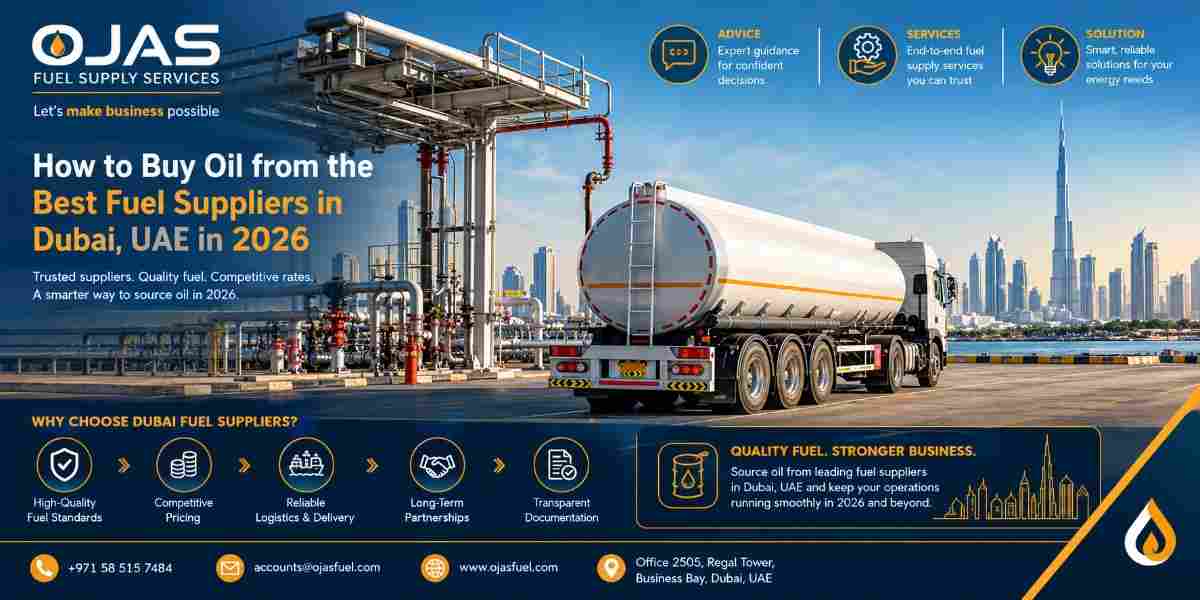
How to Buy Oil from the Best Fuel Suppliers in Dubai, UAE in 2026
Dubai has become an important commercial hub for businesses that need reliable access to fuel and petroleum products. From construction companies and manufacturing facilities to logistics operators, marine businesses and industrial projects, many organisations depend on consistent fuel supplies to keep their operations running.
However, buying oil or fuel in Dubai is not simply about finding the lowest price.
A reliable buyer needs to consider product specifications, supplier credentials, quantity, pricing, delivery arrangements, documentation, payment terms and regulatory compliance before placing an order.
This guide explains how businesses can evaluate and purchase oil and fuel from reputable fuel suppliers in Dubai, UAE in 2026.
Important: Petroleum-product trading in the UAE is regulated. Businesses should work with appropriately authorised suppliers and verify that the products, source, transportation and trading arrangements comply with applicable UAE requirements. Federal Law No. 14 of 2017 regulates petroleum-product trading across the UAE, including requirements relating to authorisation, product specifications, records, source documentation and safety.
What Should You Consider Before Buying Oil in Dubai?
Before contacting a fuel supplier, clearly understand what your business actually needs.
The most important factors include:
- Type of petroleum product
- Required quantity
- Product specification
- Delivery location
- Delivery frequency
- Required documentation
- Supplier authorisation and credentials
- Price and payment terms
- Transportation and storage requirements
- Contract and supply terms
Getting these details right at the beginning can prevent delays, unexpected costs and unsuitable fuel deliveries.
1. Identify the Type of Fuel You Need
The word “oil” can refer to several different petroleum products. Therefore, the first step is to define the exact product your business requires.
Depending on the application, businesses may purchase products such as:
- Diesel
- Gas oil
- Fuel oil
- Marine fuel
- Bunker fuel
- Gasoline
- Jet fuel
- Other refined petroleum products
For example, a construction company may require diesel for heavy equipment, while a marine operator may require a specific marine fuel specification.
Major UAE trading organisations such as ADNOC trade a range of refined petroleum products, including diesel, gas oil, fuel oil and bunker-related products.
The key point: don’t request simply “oil.” Tell the supplier the exact product, specification and intended application.
2. Determine How Much Fuel You Need
Your purchasing volume will influence the commercial terms offered by suppliers.
Before requesting a quotation, estimate your:
- Daily consumption
- Weekly consumption
- Monthly requirement
- Minimum order quantity
- Required delivery frequency
- Expected future demand
For example, a business requiring a few thousand litres periodically will have different purchasing requirements from a company looking for regular bulk deliveries.
If your business has predictable consumption, discuss a scheduled supply arrangement with the supplier rather than negotiating every individual delivery.
This can make procurement easier and provide greater visibility over your fuel requirements.
3. Verify the Fuel Supplier Before Buying
One of the most important steps is checking whether the supplier is legitimate and appropriately authorised for the petroleum products it trades.
Don’t choose a supplier solely because it offers the cheapest quotation.
Check:
- Company registration details
- Relevant business activity
- Petroleum-product trading authorisation
- Trading registration where applicable
- Product source
- Delivery capabilities
- Storage arrangements where relevant
- Company documentation
- Previous commercial experience
- References or established customers where available
The UAE Ministry of Energy and Infrastructure provides a service for registration in the petroleum products trading register.
Federal Law No. 14 of 2017 also states that petroleum products may not be traded in the UAE without the required authorisation.
Why supplier verification matters
Buying petroleum products from an unauthorised or unreliable source can expose a business to financial, operational and compliance risks.
The UAE legislation specifically addresses issues such as trading non-conforming petroleum products, commercial quantities of unknown origin and procuring petroleum products from unauthorised persons or establishments.
4. Ask for the Product Specification
Price is important, but fuel quality and specification should come first.
Ask the supplier to provide the applicable product specification and supporting documentation before confirming the purchase.
Depending on the product and transaction, documentation may include:
- Product specification
- Certificate of analysis
- Quantity information
- Origin/source documentation
- Delivery documentation
- Invoice
- Other compliance documents applicable to the transaction
The exact documentation will depend on the petroleum product, transaction structure and applicable regulations.
A reputable supplier should be able to clearly explain what product is being supplied and what documentation accompanies it.
5. Compare Fuel Prices Properly
When comparing quotations from fuel suppliers in Dubai, don’t compare only the headline price.
A supplier quoting a lower price may not be offering the same commercial package.
Compare:
Product price + transportation + applicable charges + delivery conditions + payment terms + other agreed costs
Ask suppliers whether their quotation includes:
- Product cost
- Transportation
- Delivery
- Loading or handling charges
- Applicable taxes or charges
- Minimum order requirements
- Additional delivery fees
- Other contractual costs
This gives you a more realistic landed cost rather than simply comparing the price per litre or tonne.
6. Check Delivery Capability
Fuel procurement doesn’t end when the purchase order is issued.
The supplier must be able to deliver the required quantity to the correct location within the agreed timeframe.
Before signing a supply agreement, discuss:
- Delivery location
- Delivery schedule
- Delivery vehicle requirements
- Minimum delivery quantity
- Emergency delivery options
- Lead time
- Loading and unloading arrangements
- Responsibility for transportation
- Documentation provided at delivery
For businesses where fuel availability directly affects operations, supplier reliability can be more valuable than a small difference in price.
7. Understand Payment Terms
Payment conditions can significantly affect your procurement costs and cash flow.
Common commercial arrangements may vary depending on the supplier, customer profile, transaction size and contractual relationship.
Before confirming an order, clarify:
- Payment method
- Payment deadline
- Deposit requirements
- Credit terms, if offered
- Currency
- Invoice requirements
- Conditions for refunds or adjustments
- Price validity period
Never assume that payment terms offered on one quotation will automatically apply to future orders.
8. Consider Long-Term Fuel Supply Contracts
If your business consumes significant quantities of fuel regularly, a long-term supply agreement may be worth considering.
Instead of purchasing fuel on an ad-hoc basis, you can discuss a structured supply arrangement covering:
- Estimated volume
- Product specification
- Delivery frequency
- Pricing mechanism
- Contract period
- Payment terms
- Quality requirements
- Delivery responsibilities
- Documentation
- Procedures for handling disputes or shortages
However, don’t sign a long-term contract simply because the quoted price looks attractive.
Make sure the agreement clearly explains how pricing, supply and delivery conditions will work throughout the contract period.
How to Choose the Best Fuel Supplier in Dubai
The “best” fuel supplier isn’t necessarily the company offering the lowest quotation.
For most commercial buyers, a better evaluation framework is:
1. Compliance
Does the supplier have the required authorisations and registrations for the activity?
2. Product quality
Can the supplier demonstrate that the product meets the required specifications?
3. Supply reliability
Can the company consistently supply the required volume?
4. Delivery capability
Can it deliver to your location according to your schedule?
5. Transparent pricing
Are all important costs clearly explained?
6. Documentation
Can the supplier provide appropriate commercial and product documentation?
7. Customer service
Can you reach the supplier quickly when there is an urgent requirement?
8. Scalability
Can the supplier support your business if your fuel requirements increase?
A supplier that performs well across these areas can be more valuable than one that simply offers the lowest initial price.
Questions to Ask a Fuel Supplier Before Placing an Order
Before purchasing fuel, ask the supplier these questions:
1. What petroleum product are you supplying?
2. What specification does the product meet?
3. Where is the product sourced from?
4. Are you authorised to trade the relevant petroleum product?
5. What quantity can you supply?
6. What is the minimum order quantity?
7. What is included in the quoted price?
8. Can you arrange delivery to my location?
9. What delivery timeframe can you commit to?
10. What documentation will accompany the shipment?
11. What payment terms are available?
12. Can you provide a regular or long-term supply arrangement?
Getting clear answers to these questions can help businesses avoid many common procurement problems.
What Documents Should You Check?
The exact documentation depends on the transaction and product, but commercial buyers should establish a clear documentation process with their supplier.
Depending on the circumstances, this may involve:
- Commercial quotation
- Purchase order
- Commercial invoice
- Delivery documentation
- Product specification
- Certificate of analysis
- Source or ownership documentation
- Relevant permits or authorisations
- Contract or supply agreement
UAE petroleum-product regulations require licensees to maintain records concerning petroleum products traded and documents demonstrating ownership and source, among other records and compliance obligations.
Common Mistakes Businesses Make When Buying Fuel in Dubai
Choosing Only on Price
The cheapest quotation isn’t necessarily the cheapest overall procurement option.
Always compare the complete commercial offer.
Not Checking Supplier Credentials
Never assume that every company advertising fuel online is authorised to trade the product you require.
Not Confirming Product Specifications
Different applications can require different fuel specifications. Confirm the product before placing the order.
Ignoring Delivery Conditions
A good price doesn’t help if the supplier cannot deliver when your operation needs the fuel.
Accepting Vague Documentation
Make sure the supplier clearly explains the documents that will accompany the transaction and delivery.
Not Reading the Contract
Pay attention to pricing mechanisms, delivery responsibilities, payment conditions, quality requirements and dispute provisions.
Is Buying Fuel in Bulk Cheaper in Dubai?
Bulk purchasing can sometimes provide commercial advantages, but there is no universal rule that bulk fuel will always be cheaper.
The final commercial price can depend on factors such as:
- Product type
- Quantity
- Market conditions
- Delivery location
- Transportation
- Contract duration
- Payment terms
- Supplier relationship
- Required specifications
Instead of asking only, “What is your price per litre?”, commercial buyers should ask:
“What is your total delivered cost for the required quantity and specification?”
That provides a much better basis for comparing fuel suppliers.
Why Dubai Is an Important Fuel Trading Hub
Dubai’s position as an international business and logistics centre makes it an important location for companies involved in petroleum-product trading and distribution.
The UAE also has significant energy infrastructure and established companies operating across petroleum-product trading, storage, transportation and distribution.
ADNOC Global Trading, for example, states that it trades refined products including diesel, gasoline, LPG, jet fuel, gas oil, biofuels and fuel oil.
For buyers, this means there can be multiple sourcing and supply options—but it also makes supplier verification and product due diligence particularly important.
UAE Regulations You Should Know Before Buying Petroleum Products
Petroleum-product trading in the UAE is subject to federal regulation.
Federal Law No. 14 of 2017 applies across the UAE, including free zones and other specified zones, and establishes requirements around petroleum-product trading, authorisation, transportation, storage, safety and product specifications.
The law also requires licensees to comply with applicable trading authorisations, safety standards, product specifications and record-keeping requirements.
Dubai introduced an additional petroleum trading framework in 2025. According to the Dubai Media Office, petroleum trading entities must conduct only their authorised activity, register in the relevant Petroleum Trading Register and trade materials from approved sources that meet applicable technical standards, subject to the stated regulatory conditions.
For this reason, businesses should confirm the current requirements applicable to their specific product and transaction before purchasing.
How to Buy Fuel from a Reliable Supplier in Dubai: Step-by-Step
Here is a simple procurement process you can follow:
Step 1: Define your requirement
Specify the product, quantity, specification and delivery location.
Step 2: Shortlist suppliers
Identify established and appropriately authorised fuel suppliers.
Step 3: Verify credentials
Check the supplier’s company information, relevant authorisations and trading registration where applicable.
Step 4: Request quotations
Ask multiple suppliers for comparable quotations.
Step 5: Compare total costs
Consider product price, transportation, delivery and other applicable charges.
Step 6: Verify product documentation
Request the relevant specification and supporting documentation.
Step 7: Agree on commercial terms
Confirm quantity, delivery schedule, payment terms and responsibilities.
Step 8: Sign the agreement or issue the purchase order
Ensure the agreed terms are documented.
Step 9: Arrange delivery
Confirm the delivery schedule and receiving arrangements.
Step 10: Check the delivery
Verify quantity, documentation and applicable product details upon receipt.
This structured approach can make fuel procurement more transparent and reduce avoidable risks.
Why Businesses Should Work With a Reliable Fuel Supplier
For businesses that depend on fuel every day, supplier reliability directly affects operations.
A dependable supplier can help businesses maintain:
- Consistent fuel availability
- Predictable delivery schedules
- Better procurement planning
- Proper documentation
- Product-quality assurance
- Easier inventory management
- Long-term supply continuity
Instead of treating fuel purchasing as a one-time transaction, businesses should view it as part of their overall supply-chain and operational strategy.
Final Thoughts
Finding the best fuel suppliers in Dubai, UAE in 2026 requires more than searching for the lowest price.
Businesses should evaluate the supplier’s authorisation, product quality, specifications, source, documentation, delivery capability, pricing and contractual terms before placing an order.
Most importantly, petroleum products are regulated in the UAE, so buyers should ensure that their procurement arrangements comply with applicable requirements.
If your business is looking for diesel, bulk fuel or other petroleum products in Dubai or the UAE, start by clearly defining your requirement and requesting a detailed commercial quotation from an appropriately authorised supplier.
Ojas Fuel can help businesses discuss their fuel requirements and explore suitable supply solutions based on product, quantity, location and delivery requirements.
Need a fuel supply quotation? Contact Ojas Fuel with your required product, quantity and delivery location to discuss your requirement.
Frequently Asked Questions
Who are the best fuel suppliers in Dubai?
The best supplier depends on your product requirements, quantity, delivery location, specifications, pricing and compliance requirements. Businesses should verify the supplier’s relevant authorisations and product documentation before purchasing.
How can I buy diesel in bulk in Dubai?
Start by identifying your required diesel specification and quantity. Then request quotations from appropriately authorised suppliers and compare product price, delivery costs, documentation, payment terms and supply capability.
Can businesses buy fuel directly from suppliers in Dubai?
Yes, businesses can purchase petroleum products through authorised suppliers, subject to applicable UAE regulatory requirements. Petroleum-product trading is regulated under Federal Law No. 14 of 2017.
What should I check before buying fuel in Dubai?
Check the supplier’s relevant authorisation, product specification, source, documentation, pricing, delivery capability, payment terms and contractual conditions.
Is bulk fuel cheaper than small-quantity purchases?
Not necessarily. Bulk purchases may offer commercial advantages, but pricing depends on the product, quantity, market conditions, delivery requirements, contract terms and other factors.
What documents should I request from a fuel supplier?
Depending on the transaction, relevant documentation may include quotations, invoices, delivery documents, product specifications, certificates of analysis and source/ownership documentation. The exact requirements depend on the product and transaction.
Are petroleum products regulated in the UAE?
Yes. Federal Law No. 14 of 2017 regulates petroleum-product trading in the UAE, including authorisation, product specifications, records, source documentation and safety requirements.