News
How the Strait of Hormuz Disruption Is Reshaping Diesel Supply Planning in the GCC
Quick Summary
- Brent crude settled at 88.91 dollars a barrel and WTI at 83.20 dollars on August 11, 2026, as Iran said the Strait of Hormuz would stay closed.
- The IEA cut its 2026 global oil supply forecast to a drop of 4.3 million barrels per day, widening the market deficit to 1.27 million barrels per day.
- Shipping traffic through Hormuz has fallen to roughly six vessels a day, against a pre-war average of 125 to 140 vessels daily.
- Diesel, jet fuel, and LPG remain among the most exposed products, with prices staying elevated even during brief periods of de-escalation.
- Buyers across the GCC and MENA are adjusting sourcing timelines, documentation, and contract terms to manage the resulting volatility.
Shipping traffic through the Strait of Hormuz dropped to about six vessels on August 10, 2026, compared with a 10-day average of roughly 11 vessels and a pre-war daily average of 125 to 140 vessels.
Iran’s Supreme National Security Council said the waterway will stay closed until the United States changes its position on the conflict that began on February 28, 2026.
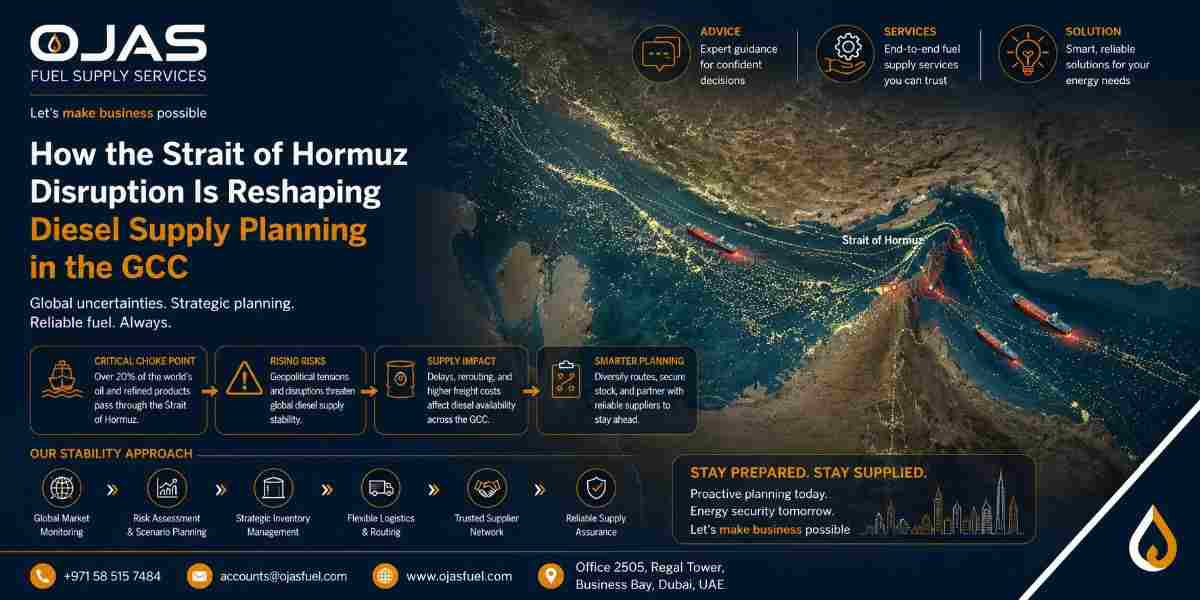
About 20% of global oil supply moved through the Strait before the war started, and the IEA puts the 2025 baseline for seaborne oil trade through the passage at roughly 25%.
Only Saudi Arabia and the UAE have pipelines capable of rerouting crude around the Strait, with a combined bypass capacity of 3.5 million to 5.5 million barrels per day, per IEA data. That capacity cannot fully replace the volumes that normally transit Hormuz.
Why Did Brent Crude Cross 88 Dollars a Barrel?
Brent futures rose 1.19 dollars, or 1.4%, to settle at 88.91 dollars a barrel on August 11, 2026, while WTI rose 1.07 dollars to 83.20 dollars, marking the highest close for both benchmarks since July 31.
Both contracts had already jumped about 5% the day before on fading hopes for a US-Iran peace deal.
Brent is now up roughly 44% since the start of 2026. The IEA notes that prices peaked at more than 60% above pre-conflict levels in late April 2026, eased in late May and June after emergency stock releases and an interim ceasefire, then surged again in July once that ceasefire broke down.
This pattern shows that price moves are tracking diplomatic headlines as much as physical supply data.
How Much Has Global Oil Supply Actually Fallen?
Global oil supply is now expected to fall by 4.3 million barrels per day, or about 4%, in 2026, according to the IEA’s August 12 report, taking total supply to 102.02 million barrels per day, the agency’s lowest forecast yet for the year.
Middle East production was 8.3 million barrels per day below pre-war levels in July, an improvement from the 14 million barrels per day lost at the peak of the crisis, but still a deep shortfall.
The IEA expects a market deficit of 1.8 million barrels per day between July and September 2026, the steepest quarterly deficit since the fourth quarter of 2021.
Global inventories have drawn down by 410 million barrels since the war began, and the agency says a return to February 2026 stock levels is unlikely before mid-2027, even if conditions improve.
Comparing the Supply Picture Across 2026
| Period | Supply and Demand Signal | Key Development | Source |
| Late April 2026 | Brent up more than 60% vs. pre-conflict levels | Peak price spike after war onset | IEA |
| June 2026 | The deficit narrows | Interim US-Iran ceasefire, emergency stock releases | IEA |
| July 2026 | The deficit widens again | Ceasefire breakdown, renewed Hormuz attacks | Reuters, IEA |
| Q3 2026 (forecast) | 1.8 million bpd deficit | Deepest quarterly deficit since Q4 2021 | IEA |
| Full-year 2026 (forecast) | 1.27 million bpd deficit | Total supply cut to 102.02 million bpd | IEA |
| 2027 (forecast) | 4.61 million bpd surplus | Assumes gradual de-escalation | IEA |
Product availability, pricing, and delivery lead time remain subject to market conditions, product source, destination, and commercial terms agreed upon at the order stage.
Why Won’t a Reopened Strait Instantly Fix Supply Chains?
Even if the Strait of Hormuz reopens tomorrow, the IEA says fully resuming flows remains the single most important variable for easing pressure on global supply, but recovery will not be immediate.
Nearly 3 million barrels per day of regional refining capacity have been shut due to attacks or lost export outlets, and refiners outside the Middle East are also curbing runs over feedstock concerns.
The US Energy Information Administration said on August 11, 2026, that some Middle East producers may struggle to restore output to pre-conflict levels by the end of 2027, even if trade patterns normalize by early next year.
That means buyers should plan for a longer adjustment period than headline diplomatic news might suggest.
What Does This Mean for Diesel Buyers in the GCC and MENA?
Diesel, jet fuel, and LPG have stayed among the most exposed products throughout the disruption, with prices remaining elevated even when crude eases.
For construction, logistics, and power generation buyers relying on 10 PPM Ultra-Low-Sulphur Diesel that meets EN 590 and Euro V standards, this volatility raises the value of locking in sourcing plans further ahead rather than buying reactively.
The Abu Dhabi National Oil Company has issued eight spot crude tenders since June 2026 as it works to move oil currently held inside the Strait, Reuters reported, a sign that even regional producers are adapting logistics in real time.
Buyers coordinating shipments through Jebel Ali, Fujairah, Hamriyah, or Khalifa face the same rerouting and scheduling pressures.
Cross-Border Sourcing: Why Documentation and Incoterms Clarity Matter Now
When supply routes shift and lead times stretch, clear Incoterms 2020 terms and complete shipment documentation become more important, not less.
Ambiguity over who bears risk during a rerouted voyage, or unclear responsibility for demurrage during delays, can turn a supply disruption into a contractual dispute.
Buyers importing or exporting through UAE ports should confirm Certificate of Analysis requirements and customs documentation with counterparts before committing to a shipment window, particularly when multiple linked deliveries are involved.
How Can Buyers Plan Around Continued Volatility?
Given that the IEA’s own outlook shifts from a 1.27 million barrel per day deficit in 2026 to a projected 4.61 million barrel per day surplus in 2027, buyers face a genuinely two-sided planning problem.
Locking in rigid long-term assumptions in either direction carries risk, which is why many procurement teams are shortening review cycles and building more flexibility into delivery scheduling.
Frequently Asked Questions
- Is the Strait of Hormuz currently closed?
Iran’s Supreme National Security Council said on August 11, 2026, that the Strait would remain closed until the US changes its position, and shipping traffic has fallen to about six vessels a day versus a pre-war average of 125 to 140.
2. How much oil supply has the Hormuz disruption removed from the market?
Middle East production was 8.3 million barrels per day below pre-war levels in July 2026, and the IEA expects total 2026 global supply to fall by 4.3 million barrels per day.
3. Will diesel prices fall once the Strait reopens?
Not immediately. The IEA notes that diesel, jet fuel, and LPG have remained elevated even during periods of partial de-escalation, and refining capacity losses will take time to reverse.
4. What are the only pipeline routes that bypass Hormuz?
Only Saudi Arabia and the UAE operate crude pipelines that can reroute flows around the Strait, with a combined capacity of 3.5 million to 5.5 million barrels per day.
5. Does this disruption affect Marine Diesel Oil availability?
Marine fuel markets are affected by the same rerouting and refining constraints hitting road diesel, since both draw on shared regional refining capacity that remains partly offline.
6. How long could this supply imbalance last?
The IEA’s current forecast shows a deficit through 2026 with a possible shift to surplus in 2027, contingent on de-escalation, so buyers should plan for continued volatility through at least the near term.
Plan Your Supply Around the Disruption, Not the Headlines
Diplomatic updates on the Strait of Hormuz can shift daily, but the underlying supply chain adjustments described by the IEA and Reuters take months to unwind.
If your operation depends on a steady flow of 10 PPM Ultra-Low-Sulphur Diesel or Marine Diesel Oil through Jebel Ali, Fujairah, Hamriyah, or Khalifa, reacting to each news cycle is not a sourcing strategy.
Ojas Fuel Supply Services coordinates Bulk Supply Planning that accounts for shifting lead times, documentation requirements, and regional routing changes so your procurement schedule stays realistic even as conditions change.
Reach out to discuss a planning approach suited to your delivery windows and destination ports.