Diesel Supply
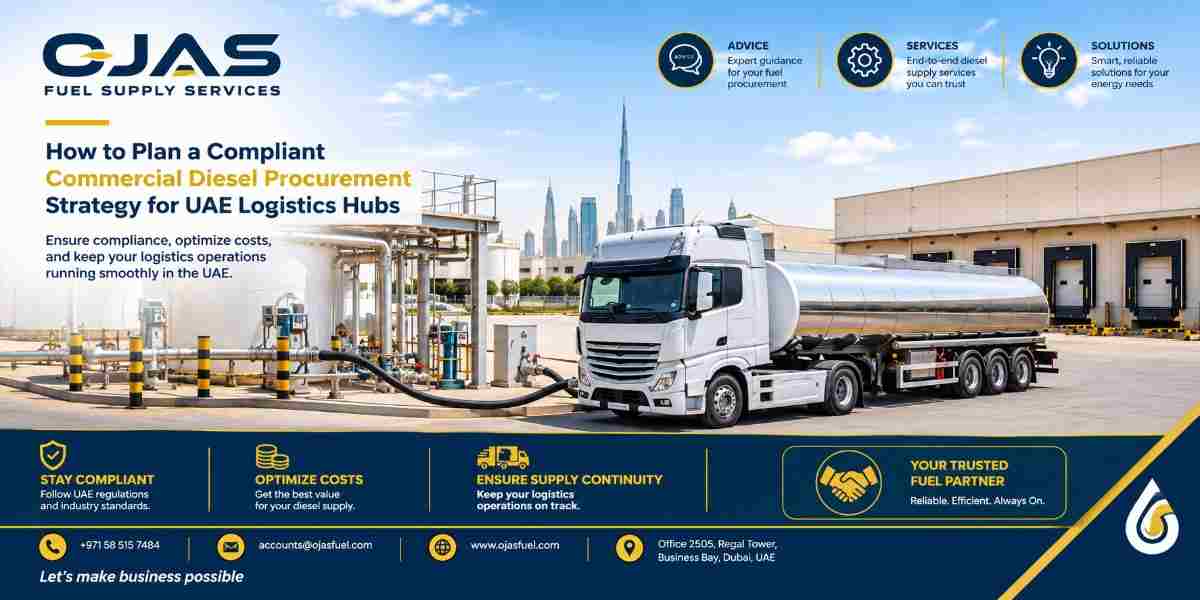
How to Plan a Compliant Commercial Diesel Procurement Strategy for UAE Logistics Hubs
Key Highlights
- Commercial logistics hubs in the UAE require 10 PPM Ultra-Low-Sulphur Diesel (EN 590) to protect Euro V and Euro VI heavy transport engines from wear.
- Downstream regulatory compliance mandates strict adherence to Federal Law No. 14 of 2017 and Dubai Executive Council Resolution No. 85 of 2025.
- Procurement managers must select between bulk storage tank drops, automated telemetry replenishment, and mobile bowser wet-hosing based on site licensing.
- Every delivery requires a traceable Certificate of Analysis from accredited coastal terminals across Jebel Ali, Fujairah, Hamriyah, or Khalifa Port.
Logistics facilities across the UAE operate under strict national fuel quality standards that mandate 10 PPM Ultra-Low-Sulphur Diesel (EN 590) for all commercial fleet engines and standby generators.
Sourced according to specifications from the Emirates Authority for Standardization and Metrology, this fuel grade limits sulfur to ten parts per million, safeguarding emission control catalysts and injection pumps.
When you run line-haul logistics along major transport spines like the E11 and E311 highways, heavy commercial vehicles rely on high-pressure common rail injection systems operating above 2,000 bar.
According to technical standards from the Emirates Authority for Standardization and Metrology under UAE.S 477, maintaining fuel lubricity below a 460-micrometer wear scar at 60 degrees Celsius, prevents severe friction inside fuel pumps.
Hydrotreated fuel strips out natural lubricity agents, so refineries introduce specialized additives to keep modern powertrains running without mechanical scuffing.
The intense summer heat of the UAE accelerates hydrocarbon oxidation inside static storage tanks, making fuel stability a practical priority for warehouse managers.
Federal fuel parameters establish a minimum closed-cup flash point of 55 degrees Celsius, which keeps fuel chemically stable and suppresses volatile vapor pockets under elevated ambient temperatures.
You should always insist on receiving an authentic, batch-specific Certificate of Analysis before unloading any tanker to verify density, viscosity, and sulfur limits.
| Fuel Parameter | Standard Specification | Governing Test Method | Operational Protection |
| Sulfur Content | Maximum 10.0 mg/kg (ppm) | ASTM D5453 | Protects DPF and SCR exhaust aftertreatment systems |
| Cetane Number | Minimum 51.0 | ASTM D613 | Ensures rapid cold starts and smooth combustion |
| Flash Point | Minimum 55.0°C | ASTM D93 | Prevents volatile vapor accumulation in storage tanks |
| Density at 15°C | 820.0 to 845.0 kg/m³ | ASTM D4052 | Maintains engine injection timing and combustion balance |
| Kinematic Viscosity | 2.00 to 4.50 mm²/s at 40°C | ASTM D445 | Delivers required hydrodynamic lubrication to injectors |
How Do UAE Downstream Regulations Govern Fuel Procurement?
Downstream petroleum procurement in the UAE is governed by strict federal and emirate laws designed to eliminate unauthorized fuel trading and protect industrial safety.
Facilities purchasing commercial diesel must verify that suppliers hold valid regulatory authorizations and source product exclusively from approved primary coastal terminals, maintaining transparent transaction records for all fuel movements.
At the national level, downstream trading activities fall directly under Federal Law No. 14 of 2017 On Petroleum Products Trading.
Under this statute, purchasing commercial fuel volumes from unauthorized distributors or receiving unverified off-spec petroleum derivatives constitutes illegal trading that carries civil fines up to AED 500,000 and potential asset confiscation.
Commercial fuel distributors must maintain active registration on the federal register overseen by the Ministry of Energy and Infrastructure.
Within Dubai mainland and free zones like JAFZA, operations must comply with Executive Council Resolution No. 85 of 2025 Regulating Dealing in Petroleum Products.
As reported by the Dubai Supreme Council of Energy, this resolution mandates that buyers retain all commercial invoices, delivery manifests, and quality certificates for five years.
Furthermore, on-site storage tanks require civil defense approvals, mandating double-walled containment or secondary masonry bunding sized to hold at least 110% of tank capacity.
Which Commercial Fuel Delivery Architecture Fits Your Facility?
Logistics operators choose between stationary bulk drops, mobile bowser wet-hosing, and automated telemetry replenishment based on their facility footprint and equipment profile.
Selecting the correct architecture balances initial infrastructure capital costs against recurring delivery markups, ensuring your distribution fleet, yard container handlers, and emergency cold storage generators receive reliable, timely fuel.
Bulk storage tank drops deliver commercial volumes of 10,000 to 50,000 liters directly to aboveground storage tanks, offering you the lowest unit fuel cost.
While this model lowers your baseline expenditure, it requires upfront capital for certified double-walled tanks, high-level shutoff alarms, and automated fire suppression systems. Large fulfillment centers with permanent land tenure favor this approach because it maximizes operational autonomy during regional logistics bottlenecks.
For leased warehouses or facilities running captive yard shunters and reach stackers that cannot access public roads, mobile bowser dispensing provides an agile alternative.
Certified road tankers visit your site during off-shift periods, refueling equipment tanks directly through calibrated digital dispensing meters.
Integrating automated tank telemetry with cloud systems further streamlines bulk drops by automatically triggering replenishment orders whenever your inventory drops below thirty percent.
How Are UAE Wholesale Commercial Diesel Prices Determined?
Commercial diesel pricing in the UAE combines global refined product indices, terminal storage fees, transport logistics, and federal value added tax.
Rather than purchasing fuel at retail pump rates, high-volume logistics hubs negotiate wholesale supply contracts pegged either to monthly government committee benchmarks or physical coastal terminal rack rates.
The UAE Fuel Price Committee meets at the end of each month to set baseline retail fuel prices based on international Platts gas oil assessments.
As detailed by official pricing announcements from the Ministry of Energy and Infrastructure, commercial buyers can negotiate Discount-to-Retail agreements that deduct a set margin from the monthly published rate.
Alternatively, high-volume operations utilize Platts cost-plus formulas tied to physical terminal racks across Jebel Ali, Fujairah, Hamriyah, or Khalifa Port.
When you arrange structured procurement through a dedicated coordinator, commercial terms reflect established wholesale trade practices.
For commercial clients engaging in Bulk Supply Planning, the minimum order quantity is 13,000 Imperial Gallons, universal across 10 PPM Ultra-Low-Sulphur Diesel (EN 590) and Marine Diesel Oil (MDO) for Ojas.
For European procurement teams, 13,000 Imperial Gallons is approximately 59,100 liters, or roughly 49 metric tons of diesel depending on ambient density. Standard commercial settlement terms are limited to Upfront payment, Cash on Delivery, or Bank Transfer on Delivery Before Offloading.
Product availability, pricing, and delivery lead time remain subject to market conditions, product source, destination, and commercial terms agreed at the order stage.
Cross-Border Fuel Facilitation and Incoterms Frameworks
Cross-border fuel coordination connects UAE coastal terminal infrastructure with growing regional energy demand across the GCC, Africa, Central Asia, and Europe.
These trade flows require clear contractual terms, standardized shipping documentation, and synchronized customs clearances through major maritime gateways like Jebel Ali Port, Fujairah Port, Hamriyah Port, and Khalifa Port.
International fuel transactions rely on standardized rules defined by the International Chamber of Commerce under ICC Incoterms 2020.
Most regional shipments utilize Free on Board (FOB) or Cost, Insurance, and Freight (CIF) terms to define risk transfer and shipping obligations between commercial parties.
Aligning these trade terms with documentation requirements from Dubai Customs and the Federal Customs Authority ensures rapid export clearances and prevents costly vessel demurrage at port berths.
Whether coordinating regional re-exports or cross-border distribution, verified quality documentation remains central to commercial execution.
Every cross-border consignment requires an independent laboratory Certificate of Analysis, certified export declaration, and cargo manifest before departure.
Establishing structured Import/Export Facilitation protocols helps international buyers manage customs compliance and port logistics without administrative delays.
Frequently Asked Questions
1. What is the minimum order quantity for commercial diesel supply coordination from Ojas?
The universal minimum order quantity across all operations is 13,000 Imperial Gallons, with no product exceptions.
For international and European procurement teams, 13,000 Imperial Gallons translates to approximately 59,100 liters, or roughly 49 metric tons of diesel, depending on ambient fuel density and temperature.
2. What payment terms are accepted for commercial fuel supply?
Standard commercial payment terms are strictly limited to Upfront payment, Cash on Delivery, or Bank Transfer on Delivery Before Offloading.
These terms apply uniformly across all commercial orders, regardless of product type or delivery terminal, ensuring structured commercial execution and transparent transaction settlement.
3. How do you verify fuel quality before discharging a tanker delivery?
Facility technicians must review the batch-specific Certificate of Analysis delivered with the transport tanker before coupling hoses.
Technicians verify that the batch identification matches the shipping manifest, check visual fuel clarity, and conduct hydrometer testing to confirm fuel density falls between 820.0 and 845.0 kilograms per cubic meter.
4. Which ports in the UAE support commercial diesel and marine fuel coordination?
Commercial fuel supply coordination centers on four strategic UAE ports: Jebel Ali, Fujairah, Hamriyah, and Khalifa Port.
These deepwater terminals provide access to certified refinery storage racks, coastal bunkering anchorages, and dedicated tanker loading infrastructure that connect domestic logistics hubs with international maritime trade corridors.
5. Why is 10 PPM Ultra-Low-Sulphur Diesel mandatory for modern logistics fleets?
Modern Euro V and Euro VI logistics fleets use high-pressure common rail injection systems and selective catalytic reduction catalysts.
Operating with diesel containing sulfur above 10 parts per million blinds exhaust particulate filters, deactivates emission catalysts, and generates corrosive combustion acids that degrade engine oil and void manufacturer warranties.
6. What civil defense requirements govern on-site diesel storage tanks?
Civil defense regulations require stationary fuel tanks to feature double-walled construction or liquid-tight containment bunds sized to retain 110% of tank volume.
Facilities must maintain mandatory setback distances of 5.5 meters from perimeter boundaries and install automatic emergency vents, high-level shutoff float switches, and certified fire-suppression systems.
Optimize Your Industrial Fuel Supply Continuity
Maintaining seamless operations across high-throughput logistics hubs requires a disciplined approach to fuel procurement.
Whether you manage regional freight fleets along major UAE highways, oversee captive yard handling equipment, or safeguard mission-critical cold storage facilities, uncompromised fuel quality and delivery reliability protect your bottom line.
Ojas Fuel Supply Services LLC coordinates dependable commercial fuel solutions tailored to your operational schedule.
Through structured Supply Coordination and strategic Diesel Trading, Ojas facilitates reliable access to specification-grade 10 PPM Ultra-Low-Sulphur Diesel (EN 590) sourced from primary coastal terminals across Jebel Ali, Fujairah, Hamriyah, and Khalifa Port.
For maritime operators requiring bunkering support, Ojas provides dedicated Marine Fuel Coordination for Marine Diesel Oil (MDO).